Home › Commercial Foundations and Footings
Support your structure with properly built commercial foundations and footings in Lexington, KY. We install spread footings, grade beams, column pads, and machine foundations according to engineered designs. Our crews handle layout, excavation, reinforcement, and accurate placement to meet project specifications.
Superior Concrete Lexington provides professional commercial concrete foundation throughout Lexington, KY, Kentucky and the surrounding area. Our licensed, insured crew delivers safe, clean, on-time work with a free estimate before anything begins. Call (859) 710-8754 or request your free quote.
Commercial concrete foundations built for Lexington businesses
If you are putting up a new building or adding onto an existing one, the commercial concrete foundation is the part you cannot afford to get wrong. At Superior Concrete Lexington, we focus on foundations and footings for retail centers, medical offices, restaurants, light industrial buildings, and multi‑unit housing throughout Lexington and the surrounding Kentucky counties.
Around Lexington, most commercial sites deal with a mix of clay soils, fill from previous construction, and sometimes high groundwater. Those conditions mean the foundation design has to match the site, not a generic plan pulled from a book. We work directly with your engineer, architect, or design‑build contractor to pour foundations that match the stamped drawings, local code, and the real ground conditions we find on site.
Whether your project is a single‑story storefront on Nicholasville Road or a metal warehouse near the interstate, our job is to deliver straight, level, properly reinforced concrete that will not move or crack in ways that hurt the structure above.
How we build commercial foundations and footings in practice
A typical commercial concrete foundation in Lexington starts with layout. We shoot grades with a level or total station, set batter boards, and mark out footing locations based on the engineer’s drawings. Accurate layout is what keeps your steel columns and walls landing in the right place later, so we double‑check measurements against the site survey.
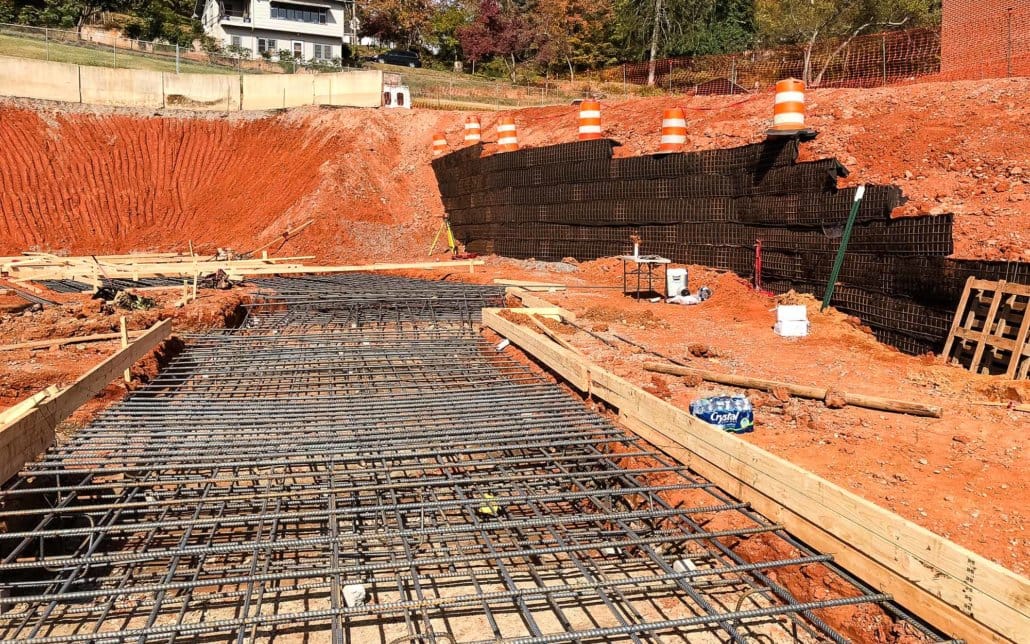
Next is excavation. For strip footings, we cut continuous trenches to the required width and depth, often 24 to 36 inches wide and below frost depth. For isolated column footings, we dig square pads, sometimes 4 by 4 feet or larger, depending on the loads. If we encounter soft or disturbed soil at the bottom, we remove it until we reach firm native soil, then backfill with compacted stone if the engineer approves.
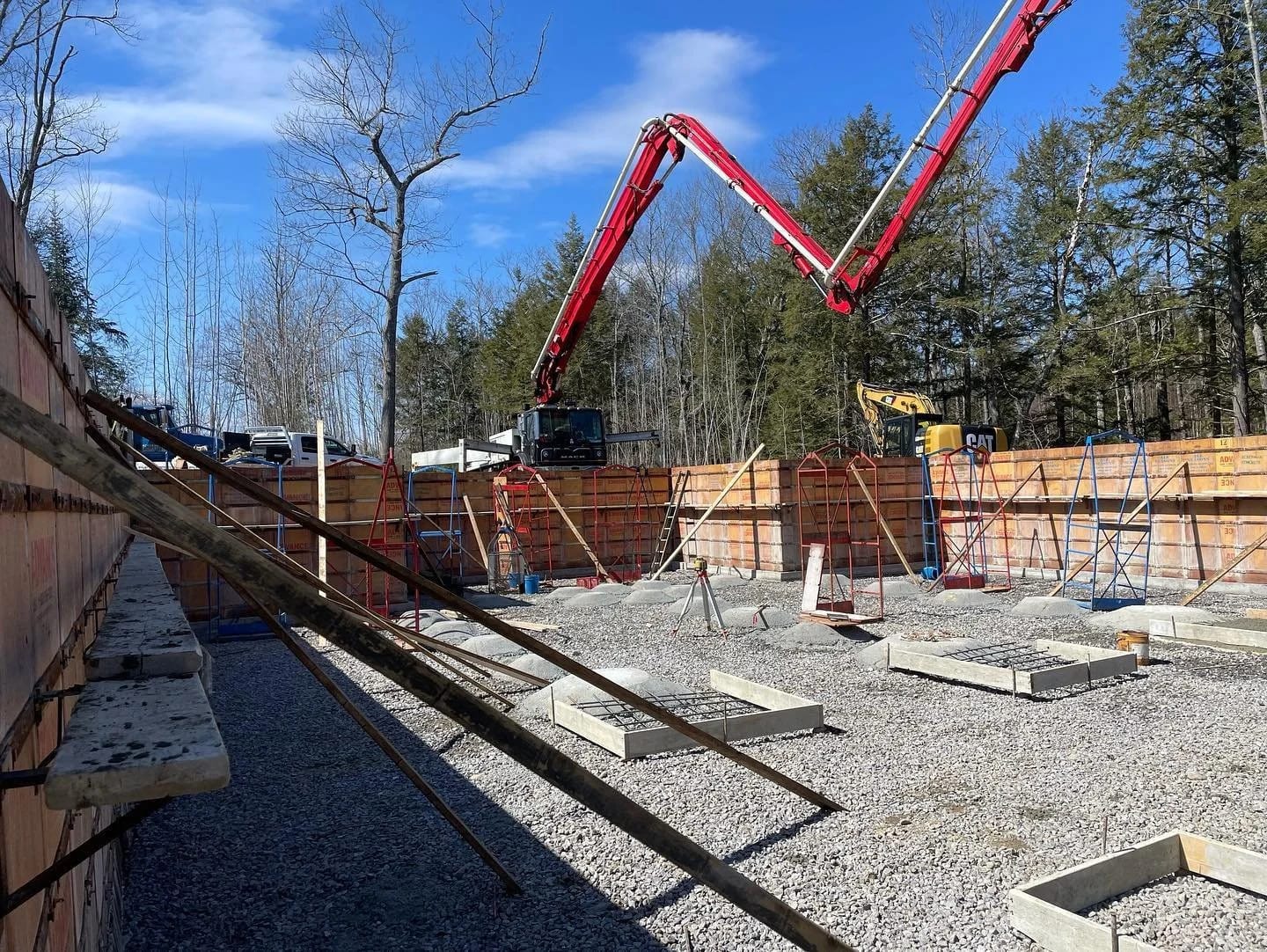
We then set forms using lumber or commercial form panels to create clean, straight edges. Rebar is installed according to the structural drawings, typically tied in grids or continuous runs with proper laps and clearances. On many commercial projects, we also set anchor bolts, column base plates, keyways, or dowels that will tie the foundation to masonry or steel framing. Before any concrete is ordered, an inspector or the project engineer usually reviews the reinforcement.
Concrete placement follows. For foundations and footings we usually use a 3,500 to 4,000 PSI mix with air entrainment for freeze‑thaw protection, unless the engineer calls for something different. We schedule the pour so that we have enough crew to place, vibrate, and strike off the concrete without cold joints. Vibrators are used to remove air pockets around rebar and embedded items, which is essential on higher load commercial projects.
After finishing, we keep an eye on curing. In warm, windy Kentucky weather, surfaces can dry too fast and lead to shrinkage cracking, so we often apply a curing compound or keep surfaces lightly covered and damp for at least several days. Proper curing is what gives you the full design strength the engineer specified.
Footings designed for Lexington soil, loads, and building types
Commercial footings are not one‑size‑fits‑all, especially in and around Lexington where soil conditions can change across a single lot. At Superior Concrete Lexington, we see a lot of two main footing types. Continuous wall footings that support masonry or concrete walls, and isolated spread footings that carry individual steel columns or heavy point loads.
For strip footings under load‑bearing walls, we look at width, thickness, and reinforcement. In some small jobs, code may allow unreinforced footings, but for commercial work we almost always use rebar to control cracking and support higher loads. Width is based on the load from the building and the soil’s bearing capacity. In areas known for weaker fill, we may end up wider than the architect first expected, so we coordinate any changes quickly so the rest of the design stays in sync.
For column footings, we pay attention to uplift and lateral forces, not just vertical weight. Metal buildings, auto shops, and distribution centers around Lexington often have large roof areas that can catch wind. The engineer will often spec thicker pads with more steel, hooked bars, and heavy anchor bolts tied deep into the footing. Our crew takes extra time laying out those bolt patterns because a small error on bolt locations can create big headaches when the steel erector shows up.
Where geotechnical reports call for it, we also install thickened edge slabs or grade beams that bridge between poor soil spots and transfer loads to better areas. On sloped sites, we may use stepped footings to follow grade without exceeding maximum risers between steps. All of this is reviewed against the soils report, so the footing design is grounded in real test data, not guesses.
What affects cost and schedule for a commercial concrete foundation
The price and timing of a commercial concrete foundation in Lexington is driven by a few main factors: soil conditions, footing sizes and reinforcement, access for concrete trucks and pumps, and coordination with other trades.
Soil is usually the biggest unknown. If the geotechnical report shows low bearing capacity, high moisture, or existing fill from an old structure, the engineer may call for deeper footings, larger pads, or undercutting and replacing unsuitable soil. That increases excavation, stone, and concrete costs. We always recommend that owners review the geotech report early and budget for the foundation based on those findings, not rule‑of‑thumb numbers from another project in a different part of town.
Rebar and anchor details also drive cost. A simple strip footing with two longitudinal bars is cheaper than a heavily reinforced grade beam with stirrups, hooks, and multiple mats of steel. Industrial and medical buildings often need more reinforcement because of heavy equipment loads and stricter deflection limits. Superior Concrete Lexington works line by line from the structural drawings to create a clear, itemized scope so you know exactly what steel and embedded hardware is included.
Site access can impact both cost and schedule. Downtown Lexington lots with tight alleys might require smaller trucks or concrete pumping, which adds equipment charges. Open sites near the bypass are easier to reach and usually more efficient to pour. Weather matters too. Winter work may need heated enclosures, blankets, or accelerator in the mix, while wet spring conditions can slow excavation and require more dewatering or stone stabilization.
We help clients sequence the work so utilities, underground plumbing, and foundation work stay coordinated. This cuts down on re‑work and delays, which often saves more than any small difference in unit prices between contractors.
What Lexington owners and contractors should check before hiring
Before you hire anyone for a commercial concrete foundation in Lexington, ask for details specific to this type of work, not just residential driveways or patios. Superior Concrete Lexington encourages owners and GCs to review three things: drawings, experience, and quality controls.
First, make sure the contractor is comfortable working directly from structural and architectural drawings, including reading rebar schedules, anchor bolt plans, and section details. Commercial foundations are not a place for guesswork. Ask how they handle RFIs when something on the plans does not match real‑world conditions.
Second, confirm that they have recent commercial projects similar in size and complexity. Pouring a small strip mall slab is different from setting heavy column footings for a pre‑engineered steel building. Look for projects in Central Kentucky, since local crews understand the typical clay soils, freeze‑thaw cycles, and local inspection procedures.
Third, ask about inspection and testing. For many commercial jobs in Fayette County and nearby jurisdictions, special inspections or concrete cylinder tests are required. A qualified foundation contractor will know when a third‑party inspector needs to be present, how many cylinders to take, and how to protect test samples until pickup. They should also provide daily pour logs that record truck numbers, batch times, and slump or air checks.
When you talk with Superior Concrete Lexington, we can walk you through our full process for your specific site: reviewing plans, checking elevations, planning excavation, placing and tying rebar, installing formwork and embeds, pouring and finishing, curing, and final inspection. Our goal is simple. When the framing or steel crews arrive, they find a square, level, correctly detailed foundation that lets them move ahead without surprises.